
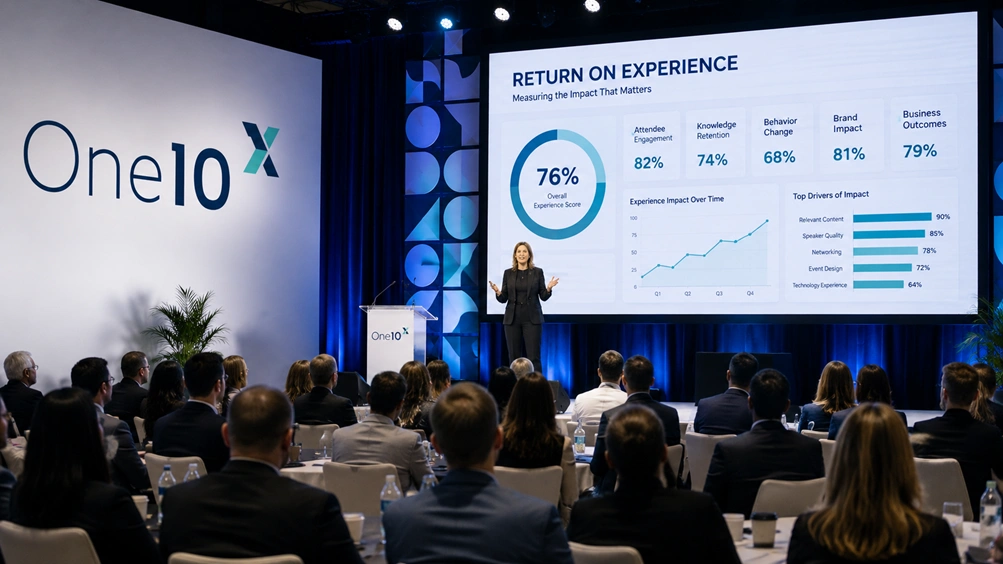
Corporate planners know the pressure of justifying a massive budget for a weekend conference or sales meeting. Up until now, tracking success meant looking at basic attendance numbers or surface-level satisfaction scores. However, a Minneapolis-based company named One10 wants to change that. The motivation science firm just launched a new framework centered on Return on Experience. This platform helps planners evaluate the actual business impact of incentive travel, conferences, and recognition programs. It goes beyond simple logistics. Instead, it measures how corporate events shape the way people actually think and feel.
The engine behind this methodology is the proprietary Xperience Index system. This tool helps businesses look deeper into human behavior. It quantifies how specific corporate experiences influence emotions, relationships, and brand perception.
Richelle Suver, Managing Director for One10, shared her thoughts on modern corporate metrics.
“Planners have long been asked to prove ROI, but traditional metrics don’t tell the full story. The Xperience Index bridges that gap by connecting performance KPIs directly to the reasons executives are investing in such events for their employees, salespeople, and channel partners.”
Moving Beyond Simple Satisfaction Surveys
To give executives a clear picture, the framework tracks Return on Experience across four distinct strategic dimensions. First, emotional return captures how effectively an event inspires and energizes the people in the room. Second, behavioral return measures actual performance, trackable actions, and tool adoption. Third, relational return highlights how connections are built and strengthened between teams. Finally, brand return shows how well the experience reinforces core corporate values.
Planners get all these valuable insights from tailor-made and short questionnaires. These questionnaires can be used on-the-spot or immediately after the event. Through the use of both numerical scores and comments, the system makes it possible for companies to detect patterns over the long haul. Planners can now easily benchmark performances for more than one event at the same time. They will also be able to identify their strengths and weaknesses. This approach makes it easier for planners to match their events to corporate goals.
Want more marketing excellence stories? Visit MarTech News for insights, trends, and expert updates.
News Source: Businesswire.com